Pages

Showing posts with label memoir. Show all posts

Tuesday, September 11, 2012

memories

September 11th, 2001 is one of those days that will be forever engraved in my memory. Eleven years ago today after spending hours transfixed in front of the TV, I remember how strange it felt to go outside and find everything was normal. However the next morning the spooky quiet in the air—there wasn't a plane to be heard—told me that the long fingers of the unthinkable thing that had happened the day before in New York had indeed reached thousands of miles across the continent to me.

But as significant as the day was and is, it is also fading from my memory and our collective memories. Just think, there is a whole generation of kids eleven years and younger who have no memory of this day whatever because they weren't around when it happened.

Other important days are fading too. This year we lost Neil Armstrong—the first man who walked on the moon. His passing sparked a storm of nostalgia and prompted me to think back to the momentous day when a human first touched the moon. To tell you the truth, I could recall very little of it.

How well do you remember:

- the death of J. F. Kennedy?
- the fall of the Soviet Union?
- the kafuffle around Y2K?
- the beginning of the Iraq war?
- the tsunami of December 26, 2004?
- Hurricane Katrina?

Chances are if you remember a national or international event, it is because there is a part of your personal story that connects with that event.

Is remembering the past important? I think it is because:

  •  it helps us understand the present.
  • as we think back of heroic actions and reactions it revives our faith in human strength and resilience.
  • if we're people of faith, it certainly strengthens our faith in God as we reflect on His faithfulness through hard times and in bringing us to this point.
  • it is interesting.
  • it's part of the legacy we can leave our kids, grandkids, and great-grandkids.

What significant days from history do you remember? What about your personal history? Have you or are you preserving your memories in any way?

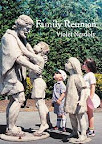
I love the bronze sculpture "The Veteran Sailor" (by Nathan Scott, on display at Ship Point Plaza on the Victoria B.C. waterfront) of a sailor, holding a  copy of The Daily Colonist with the headline "Peace in Europe: Germany Surrenders!"


He looks happily onto another scene, "The Homecoming" (also by Nathan Scott) on this memorable day—a day of which I have no memory because I wasn't born yet. Probably most of you weren't either. Fortunately lots has been written about that day so we can live it vicariously.


Addendum:

After posting this piece on memories, I ran across an example of how important it is to hand down memories. Kitty Werthmann is a woman who grew up in Austria (she now lives in the U.S.A.) and remembers how Hitler came to power there. If you listen to her story,  you'll pick up on some of the shocking parallels between western society today and Austrian and German society in the 1930s (She tells her story on three videos).


Kitty Werthmann's story - Part 2

Kitty Werthmann's story - Part 3

Violet Nesdoly / poems

Bookmark and Share

Tuesday, July 07, 2009

book review: West Nile Diary by Kathleen Gibson


Title: West Nile Diary: One Couple's Triumph Over a Deadly Disease
Author: Kathleen Gibson
Publisher: BPS Books, March 2009, paperback, 184 pages
ISBN-10: 1926645014
ISBN-13: 978-1926645018


It was in mid-August of 2007 that Rick Gibson got the mosquito bite – a most unexceptional thing to happen at a picnic in Yorkton, Saskatchewan. But days later he was in the throes of such mysterious and disparate symptoms, it took a while for doctors to come up with a diagnosis – West Nile Neurological Disease (WNND). Over the next months his wife Kathleen Gibson rode the roller coaster ride of WNND with him. In West Nile Diary she tells their compelling story from his hospital bedside in Yorkton and the Wascana Rehabilitation Center in Regina. Using a mélange of journal entries, emails to friends and family, newspaper columns, and articles, Gibson journeys us through a six-month interlude that changes the course of this couple’s life forever.

We experience at close range the terrifying first days of Rick’s illness as he gradually loses his ability to walk, undergoes a change in personality, and even sometimes forgets his name. During rehabilitation we live the elevator ride of one day’s progress followed by the plummet of the next day’s regression. We cheer for him as he regains function, participate in Kathleen’s joy at seeing the real Rick emerge again, but wonder if he’ll have a job to return to.

Of course the book does more than just tell a story. For in the telling, Gibson touches on many topics, among them divine healing, the purpose of sickness and pain, the beautiful people found in unexpected places, the importance of family, the need for advocacy, what really matters in life, and the key role that faith in God plays when handling such crises.

Gibson (long a successful freelance writer and editor), puts her skills to good use in this memoir. She displays the sensitivity to beauty of a poet:

“I can always tell when Bus is at the keyboard. The man’s music soars to the glass roof, joins the sunshine, and becomes the spirit of optimism itself. Then it rains back down and washes over us, healing things that only music can heal” p. 79.


Her penchant for detail is journalistic:

“Maggie has been teaching me to help Rick transfer from bed to chair and back…. Here’s what it looks like:

Take the side arm off the wheelchair. Bend low in front of him, wrap my arms about his waist, do a lunge, front knee bent, back straight; brace legs, rock both our bodies back and forth, and then, on the count of three, HEAVE!” p. 78.


She combines an eye for the humorous with the timing of a comedian and the result is welcome comic relief:

“The children were especially interested in the putty….

Benjamin accepted the pile of moldable yellow rubber carefully. Hesitating at first, he began digging his fingers in and drawing them forward, just like ‘Gampa.’

Looking up, his eyes met mine. “Not poo, Nana,” he said reassuringly. “Is not poo.”

Amanda and I figured it out: He had never heard the word putty before. Likely ‘potty’ was the closest he could find in his two-year-old vocabulary” p. 94.


With the skill of a novelist Gibson takes us past circumstances to an understanding of heart truths. Though the pirates of West Nile (her description of the disease) could have scuttled the Gibsons’ boat, they didn’t. In fact, just the opposite happened. In Gibson’s own words (from the Preface):

“I’ve learned three things in my journey down the West Nile with Rick and the pirates: God is a lot stronger than I thought he was, I’m a lot stronger than I thought I was, and God can do exquisite things with broken circumstances” (p. viii).


This inspirational story will not only encourage you to keep hope alive in the worst circumstances, but will also educate you about West Nile Neurological Disease. Don’t be surprised if after reading it, you find yourself at the local drugstore or supermarket loading up on mosquito repellent.

Wednesday, February 27, 2008

book review: Reverend Mother's Daughter by Mary Haskett


Title: Reverend Mother's Daughter
Author: Mary Haskett
Publisher: Believe Books, 2007
Genre: Memoir
ISBN: 0978742818

“I don’t want the family to know about you.” These painful words spoken to Mary Haskett by her 91-year-old half-sister draw us into Reverend Mother’s Daughter. The book then goes back in time to tell the riveting tale of how Mary came to this point.

Mary was born in 1934 after her 40-year-old mother had a liaison with a young west African student. Reverend Mother, an Anglican nun, takes Mary into the Sisters of Mercy priory shortly after birth when her parents refuse to acknowledge her. Here she becomes only the first resident of Reverend Mother’s home for children, and is raised under the firm but caring hands of the sisters.

Mary’s first-person account of World War II as seen through the eyes of a child is fascinating. Using her incredible memory for details and her well-honed story teller’s instincts she takes us back to the day the children pack all their things and travel from London to Torquay to escape the German bombs.

We feel her wonder at seeing the sea for the first time, experience the terror of bath night when Ada is in charge, and identify with her confusion when Gardener Grimshaw invites her into his shed for more than peaches. Most of the time we live in the childhood world of games, play and sweet friendships, though the treatment she receives from some adults and children because of her race and orphan status is a damning expose of the attitudes and prejudices of the day.

After the war is over it’s back to London and then off to nursing school. Here Mary’s zest for life comes through as she gets her first taste of independence. Soon she meets the charming Mario and we join her in the thrill of first love, only to plummet to the despair of betrayal and the loneliness of living as a newcomer in Canada. Finally we’re treated to the pinch-me wonderment of mature love.

Mary’s coming to faith during one of the valleys in her life is the turning point of the story. Suddenly she sees her past in a new way. As she works through old hurts she gains wisdom and finds new usefulness. Even the rebuff of her half-sister that begins the story proves to be a step along the path to wholeness. Through it all she credits God, working through the loving care of Reverend Mother and others, for her happy productive life.

The beautiful cover photo of Mary as a child and the 22-page section of photos in the middle of the book bring the characters to life.

Reverend Mother’s Daughter will make you laugh, cry and feel outrage, relief, sympathy and admiration. It’s a story covered with the fingerprints of God’s grace. When you’re done I can almost guarantee you’ll want to pass your copy around to all your friends.

Related Posts Plugin for WordPress, Blogger...